
Is Reorganizing Really a Strategy? What's the Significance of WPP Creative and Omnicom Advertising Group (if there's any significance at all)?
The reorganizations added a management layer between agencies and CEO. What will this layer do, apart from kill brands, cut costs and pitch new relationships? Anything new and strategic? Unlikely.

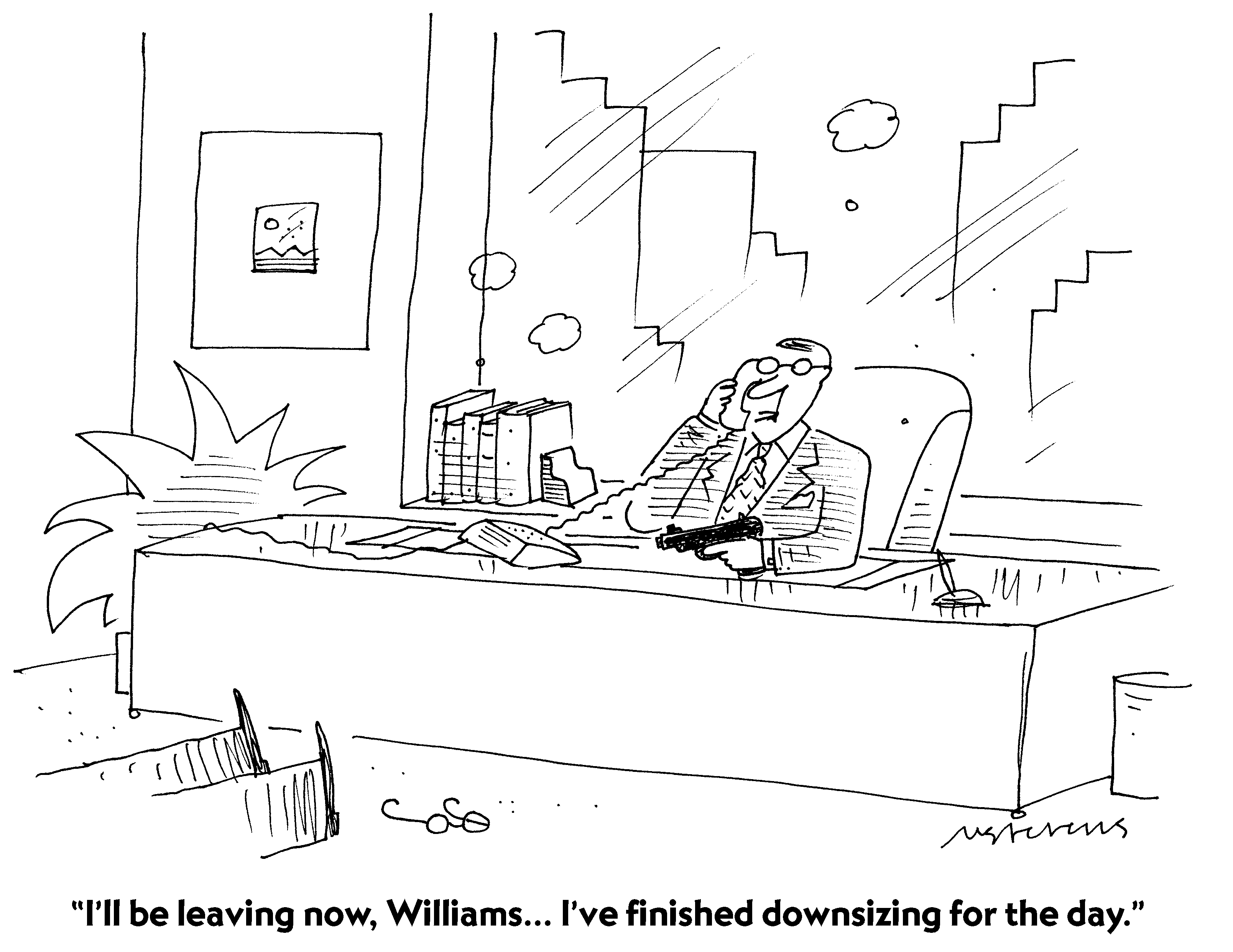
Credit: Mick Stevens, The New Yorker, The Cartoon Bank
The trade press (AdAge, Ad Week, Campaign, The Drum, etc.) gets excited when there’s a reorganization or management change at an agency or holding company.
Here’s what’s going on, they write, as if the shuffling of organizational building blocks has deep meaning.
Structure is not Strategy. A change in structure may be required to implement an important new strategy, but in and of itself, structure is not terribly interesting. What’s interesting is what strategic changes are going on (if any) that require a change in structure.
Alfred D. Chandler (1918-2007) Straus Professor of Business History at Harvard Business School and the most influential business historian of the 20th century, wrote a major book in 1962, Strategy and Structure. The book concluded that “strategy comes first, and structure follows.” It doesn’t happen the other way around.
What’s going on strategically at Omnicom that requires the structural creation of Omnicom Advertising Group?
Troy Ruhanen of TBWA is now in charge of Omnicom’s and IPG’s creative agencies. These agencies will not report directly to John Wren. Troy heads the new layer of management between the agencies and Omnicom’s CEO.
Strategically, the reorganized holding company announced that it would eliminate 4,000 positions and retire the agencies FCB, DDB and MullenLowe. The newly organized Omnicom, it said, will be a leader in “creativity and effectiveness” that brings both “award-winning talent” and AI expertise to the marketplace.
That’s it. In other words, it’s a continuation of Omnicom’s 15-year cost reduction strategy, facilitated by the creation of Omnicom Advertising Group. John Wren does not have to get his hands dirty. Troy Ruhanen and his C-Suite team will do it for him.
In all likelihood, that’s exactly what’s going on at WPP Creative. Brand elimination? Probably. More cost reduction? Certainly.
Let’s not forget that the holding companies have focused on reducing costs for over 20 years in order to shore up share prices and margins.
They’ve done this instead of learning how to improve client brand performance and price their agency services for the work they do.
In their extensive cost-reduction efforts, they have liquidated their historical pool of senior managerial, strategic and creative talent.
I don’t see how the creation of Omnicom Advertising Group or WPP Creative will turn this around. Quite the opposite. Brand eliminations mean senior management eliminations, too.
We’ll see more of the same. More cost reductions. More talent reductions. Nothing done in the name of “improving advertising effectiveness for the benefit of clients, who have had trouble growing for the past 15 years.”
You might think that after 20+ years of milking their advertising agencies to shore up share prices, holding company leaders would finally say “we can’t do this forever! We need new strategies to increase our effectiveness with clients!”
Nah. That’s too hard, and besides, no one is left who knows how to do it. New advertising effectiveness won’t come from AI. What we’re good at is giving out pink slips. Restructuring will help us get even more efficient at doing this.
Don’t get excited about the restructuring of WPP and Omnicom, folks.
Their cost-reduction strategies have not changed. The new structures just make it easier for them to do it.
I’m slightly concerned that agencies appear to be doing all the transformation and change work in a vacuum, asking themselves, “How can we survive and do more with less?”
I believe the future of agencies will be defined far more by brands deciding how they want to operate. At the moment, many brands seem to tinker at the edges. There are very few radical solutions or genuine innovation. Agencies then respond to those incremental shifts rather than helping to reshape the model.
My suspicion is this: if core marketing leaders refocused on creativity, storytelling, surprising solutions and behaviour change, and deliberately decoupled media planning and buying, adaptation, measurement and data management, handing much of that operational work to specialists (internal/external/hybrid) and machines who are better suited to it, then agencies would look very different.
Perhaps leaner in some areas. Perhaps deeper in others. But certainly more focused on the craft that made them valuable in the first place.