
A Positive Game-Plan for Procurement
Procurement needs to give back as well as take. Thus far, it has done more taking than giving. What would a positive game-plan look like?

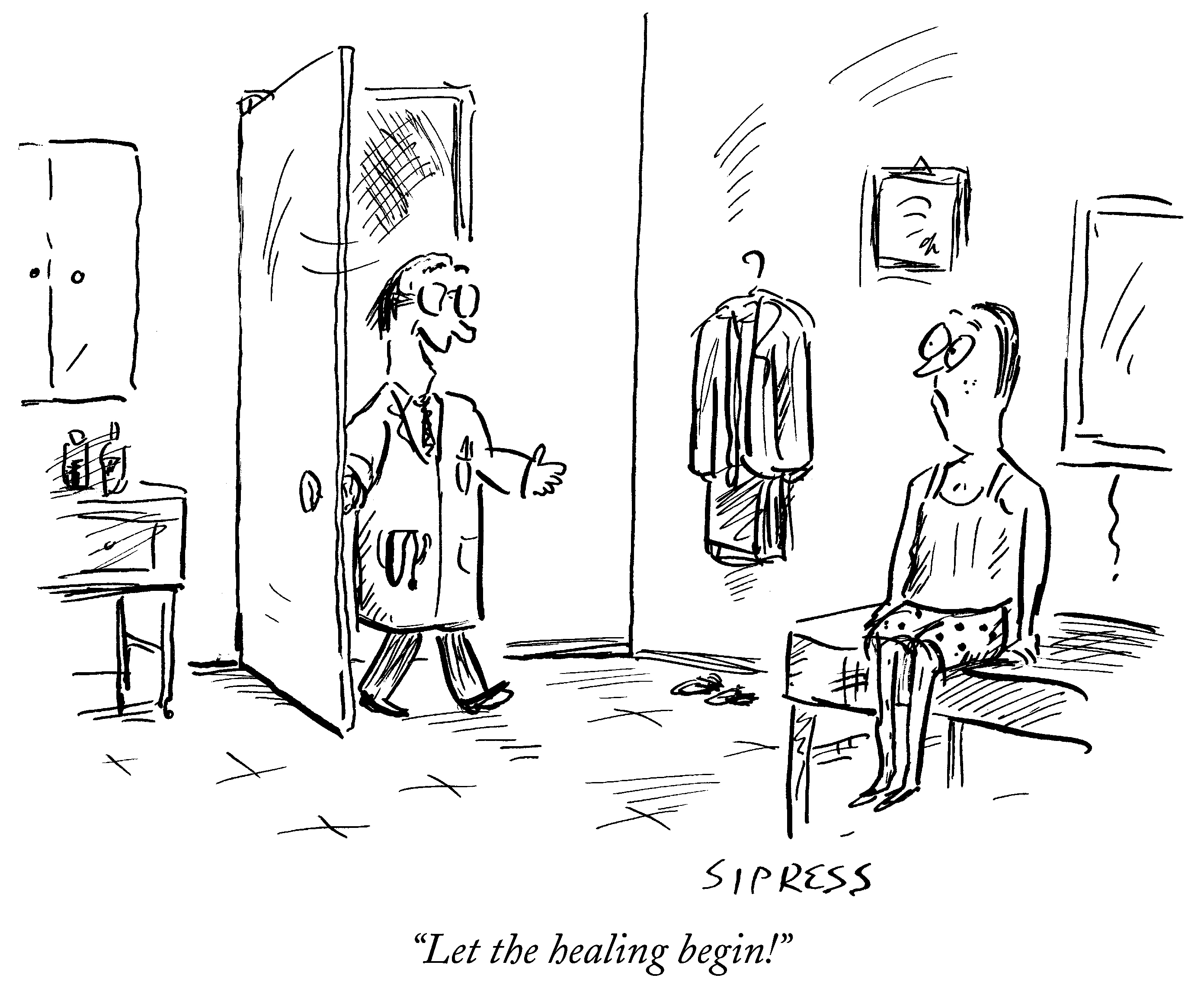
Credit: David Sipress, The New Yorker, The Cartoon Bank
Since the end of the 15% media-commission days, agency fees have halved and agency workloads have doubled.
This has not been a good thing for the agency partners — agencies are weaker, more junior and more overworked than they have been at any point in the past several decades.
Their clients, too, have not grown sales (except through price increases) during the past 15 years.
A new game plan is required, and Procurement can lead the way.
Here are my thoughts:
Procurement’s New Game-Plan
Focus on strengthening supplier effectiveness rather than on reducing supplier costs.
Articulate and demonstrate your belief and commitment to improved marketing as one of the key drivers of brand growth. Don’t undervalue marketing and treat it simply as a cost that needs to be reduced.
Pursue longevity of agency relationships rather than changing suppliers every 3-5 years. This means “fix” relationship problems when they arise — rather than throw relationships away.
Improve the briefing and ad approval processes. Eliminate the wasted hours that come from poor briefing and inefficient approval processes.
Critically examine the quality and quantity of media and creative scopes of work. Scopes are bloated with deliverables that do not drive brand growth. Ineffective scopes waste resources, time and money. Improving the quality of spend and mix is critical.
Ensure that agency fees are in synch with scope workloads. This requires scope of work documentation and measurement, using measurement systems like ScopeMetrics®AI and documentation systems like Decideware.
Reduce fees when AI efficiencies justify it but share some of the benefits with your agencies. Let them keep a portion of the efficiencies to reinvest in greater strategic and analytical capabilities. This will help them become more effective in designing brand growth strategies.
Outside of the media world, Procurement has played a key role in transforming and improving the performance of key suppliers.
Think of today’s automobiles — they run forever, with greater fuel efficiency, very few warranty claims, requiring little more than oil changes every 5,000 miles.
That was not always the case. Procurement helped to make it happen (read The Machine that Changed the World, a book about the transformation of the automotive supply chain. Many of the lessons directly apply to the media industry).
We’ve written enough about the problems plaguing the advertising industry — there’s little new that can be said.
We need to focus on solutions. Procurement has power and expertise. It can be used as a force for change to improve advertising effectiveness and brand growth.
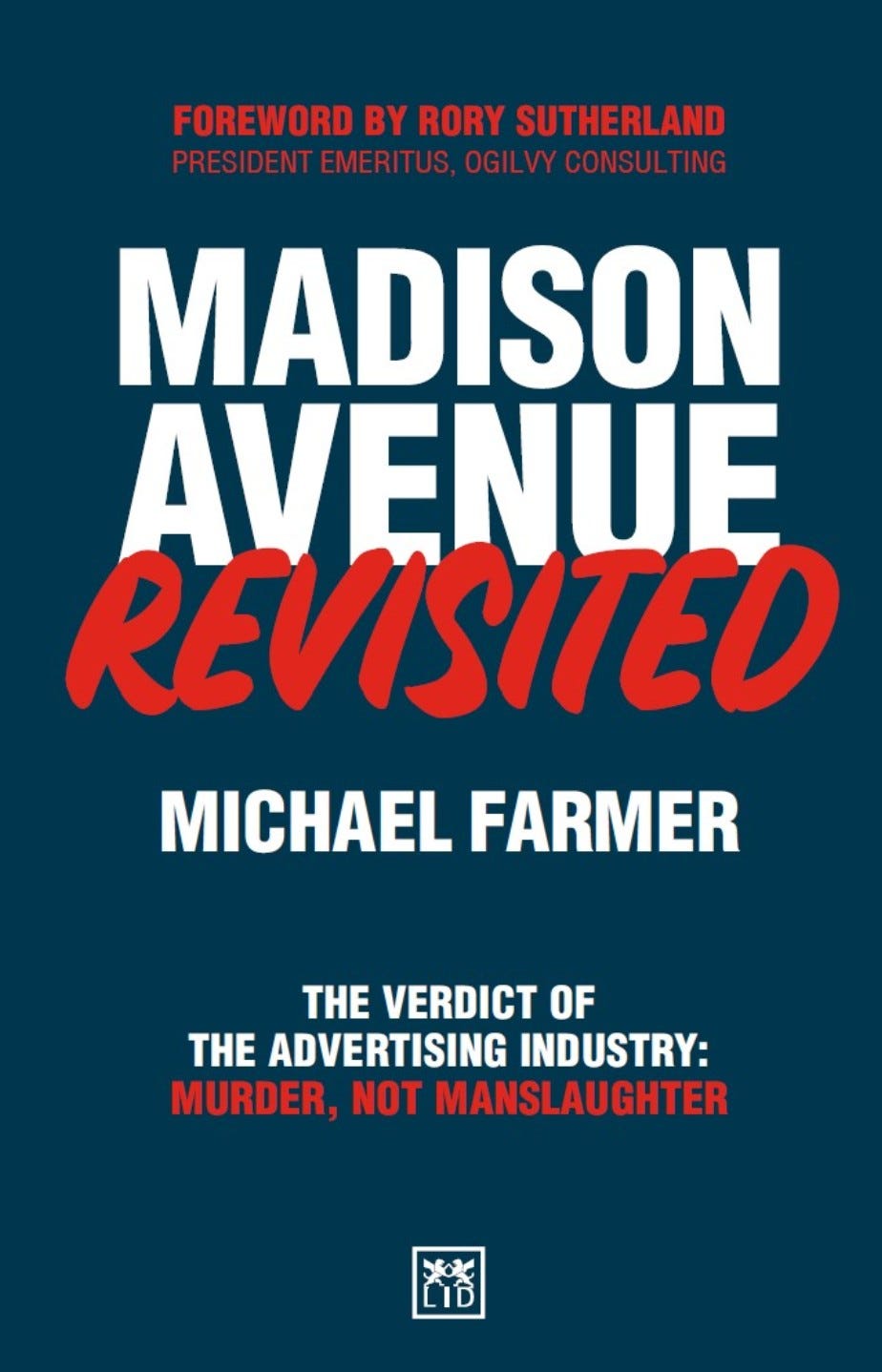
My third book about the advertising industry, Madison Avenue Revisited, is now available for pre-order on Amazon. The book, which focuses on the evolution of media and creative operations, the effect of holding company ownership and the brand performance challenges faced by clients will be launched at Cannes next week.
Hope to see you there!
Agree with everything you outline, but do you honestly think that Procurement will ever take your suggestions? I don't.
The media advertising business has been led by an extraction-based economic model -- extracting the maximum value for the minimal investment, adding no value to the ecosystem. Ultimately the model will drain the most valuable supply leaving only the drudge and slime. Michael Farmer's insights have always been both prescient and hopeful, but the time for the industry to pay attention and upgrade the models is now --- or never! @michaelfarmer